The nursery page for the first two years
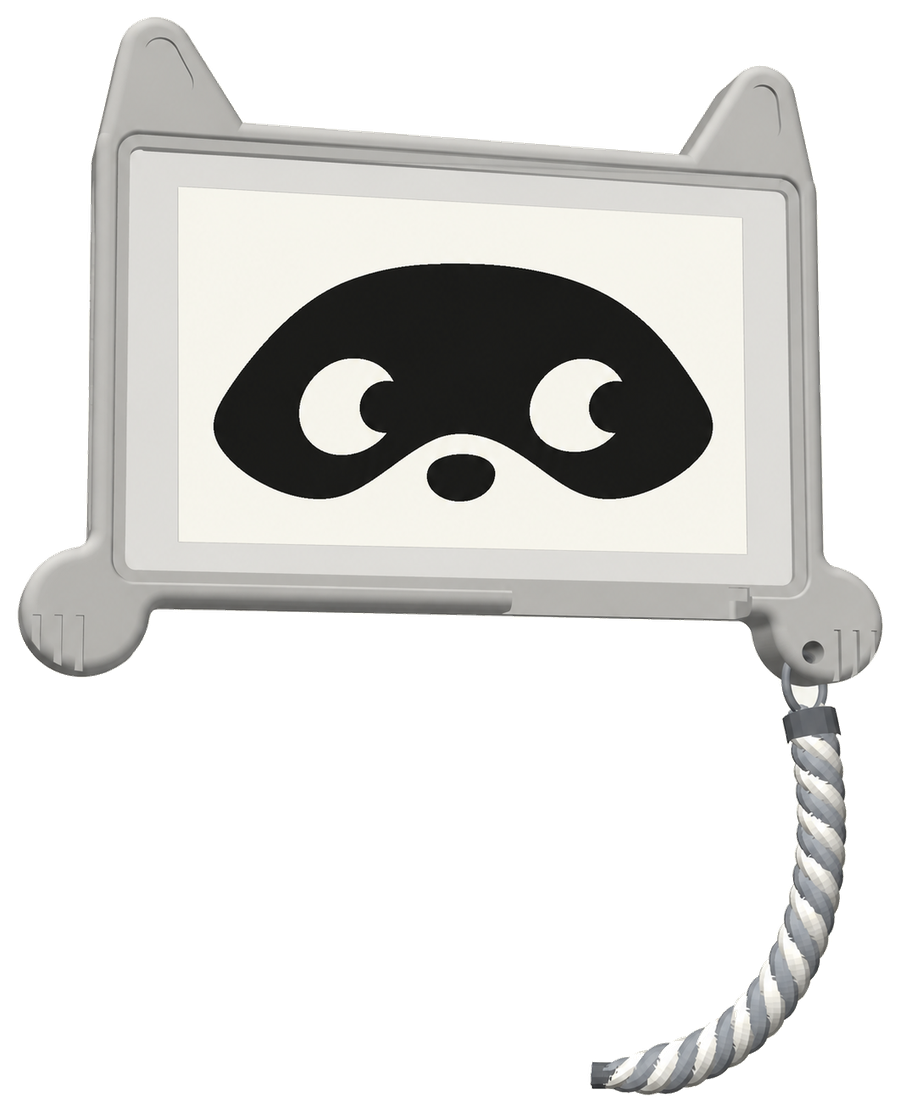
Bandit is a paper-like display for the nursery: hundreds of bold black-and-white cards, your own family's faces, and a read-along mode that shows you the line — then turns the page when it hears you read it. No backlight, no speaker, no account. Just a page, and you.
Founding families now enrolling.
Designed and distributed in the USA.


How it works
The best-supported finding in all of infant media research is that babies learn words from the people in the room, not from a device. So Bandit isn't a screen for your baby to watch — it's a page for you to read from. It gives you the page, the line, and the moment, and turns the page when you've read it.

Read along · 1 of 4
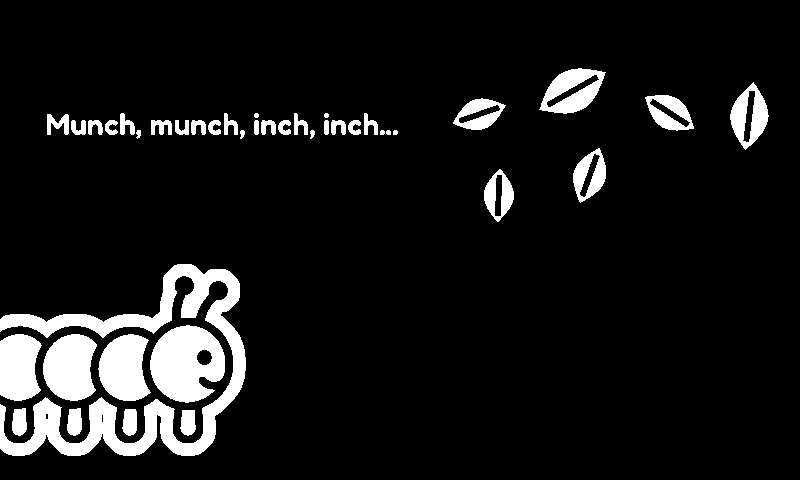
Say: munch, munch!
Then wait.
The real Read Along loop, running in your browser. Your microphone is only ever used here, for loudness — nothing is recorded, nothing leaves this page.
Family Faces
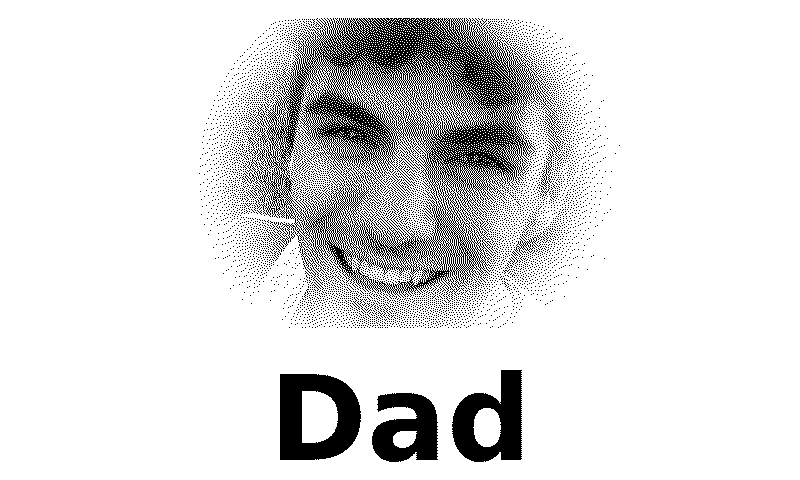
In the first months, faces fill about a quarter of every waking hour — and they're a few familiar faces, up close. The people your baby loves most aren't in any board book. On your Bandit they can be, in about a minute: pick a photo, frame the face, choose a style, name them, send.

Photo — soft and true to life

Bold — for the newest eyes

Word card — a face and a name
The photo never leaves your device. It's converted on your phone and travels straight to the display over Bluetooth — there is no server and no account, so there is nowhere else for it to go. Grandma on your Bandit stays between you and Grandma.
Beyond paper
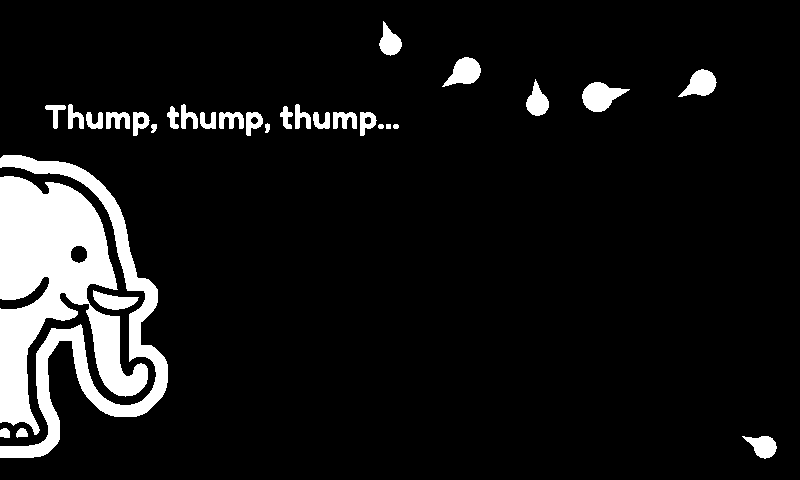
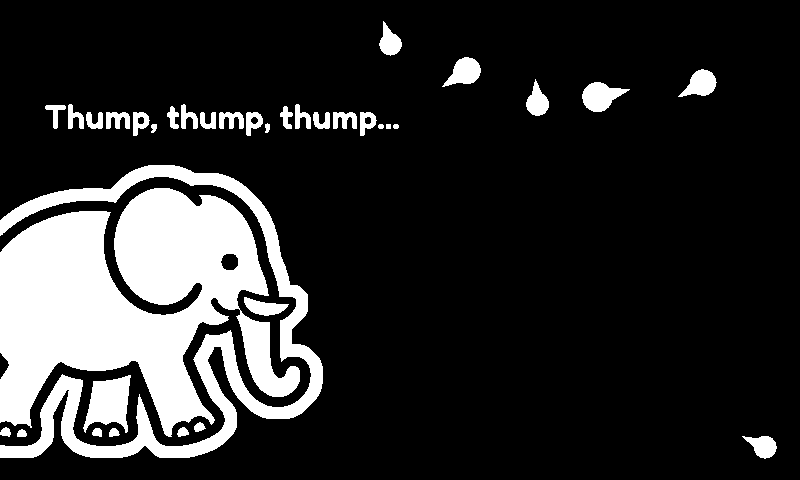
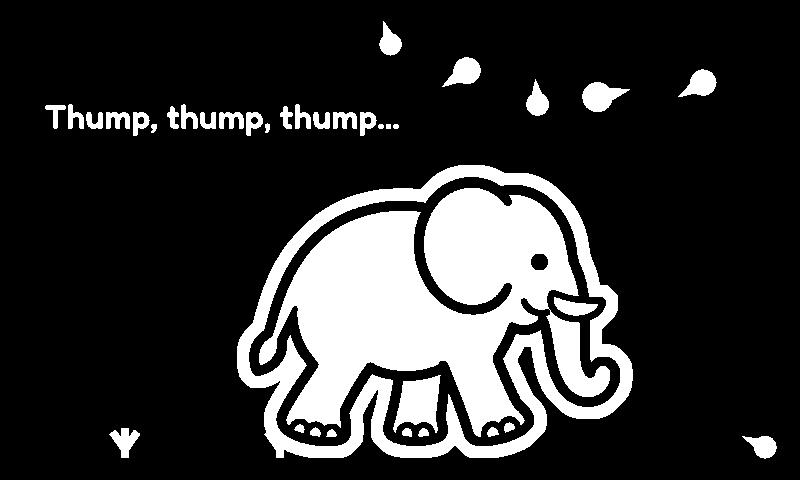
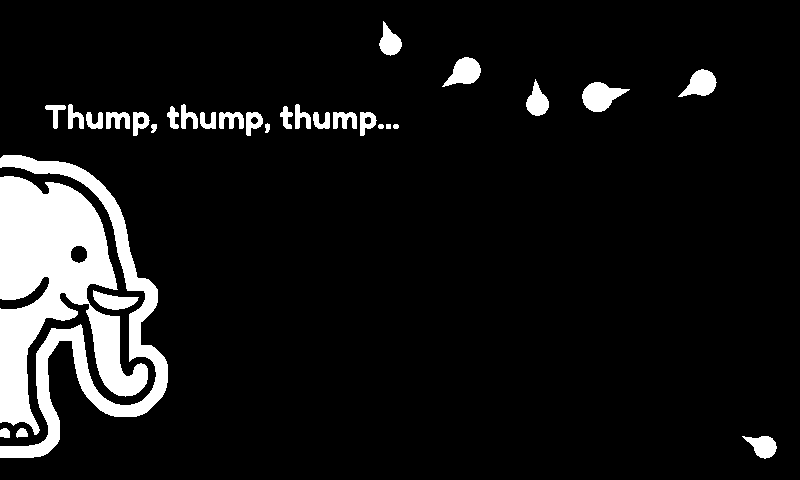
Some decks move. The elephant is off the page, then closer, then here — five cards on one background, drawn so the only thing that changes is the elephant. Stop-motion, at a pace a baby can follow.


“Thump, thump, thump…” — five frames of Here They Come! Scroll it sideways.
One window, and what's outside it changes with the hour — sun at breakfast, lunch at midday, the moon at night. Days are how babies learn that the world has a shape.

Morning

Midday

Night
Story decks only move when you read them. Not a voice command, not a wake word — the display simply hears that someone is speaking, and turns the page. Stop reading and the story waits for you. In a noisy room, your phone can do the listening instead.


Story decks run about 28 cards — nine little scenes, three cards each, and a gentle moral that's never spelled out.
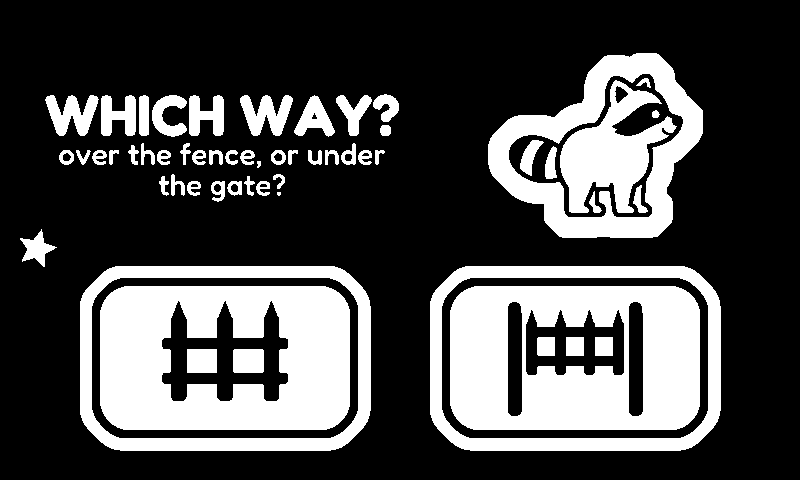
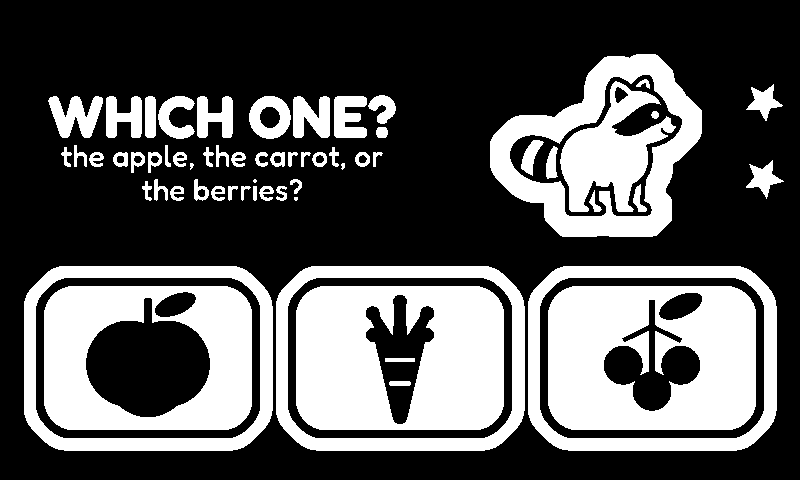
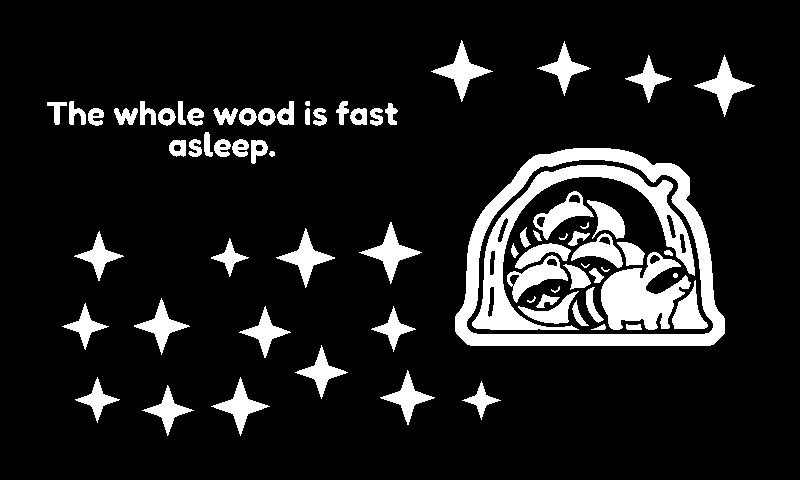
For the toddler years: a raccoon who can't sleep, and the night he has if they choose it. Over the fence or under the gate? The apple, the carrot, or the berries? One tap on the page and the story goes that way — a different night every time, and every card still read aloud by you.


Bandit's Big Night — 32 cards, and the reason the mascot has a name.
The display and the app
Bandit fits in your hand, weighs less than your phone, and lives in the diaper bag. You hold it. It never goes in the crib.
Ages & stages
The same display does a different job every few months. Here's what that job is at each stage, and what the research says about it.

A newborn sees very little detail and very little contrast: only big, bold, simple shapes come through at all. Meanwhile faces fill about a quarter of every waking hour, and they're few, close and familiar.
How Bandit helps: bold patterns and your own faces, changing slowly. A place to rest new eyes, and a reason for you to lean in and talk.

Eyesight sharpens, hands start reaching, and attention starts chasing whatever is new — babies look away from what they've already learned. They also understand far more than most parents assume: by six months they look at the right object when a common word is spoken.
How Bandit helps: this is where one poster stops being enough and a library earns its keep. Looking away isn't boredom — it's the signal to turn the page. And naming what's on it is already landing.

Understanding takes off. Pointing at fourteen months predicts vocabulary years later. One card is one clear thing to look at together — and when a parent joins in on what a baby is already looking at, the baby looks longer.
How Bandit helps: read-along decks, prompts that ask for a point rather than just a word, and stories that move at the speed of your voice. This is where Bandit is at its best.

Back-and-forth conversation at this age is the strongest predictor of later language that researchers have found. What helps shifts toward variety, stories, and talking about things that aren't in the room.
How Bandit helps: story decks with a beginning, a middle and a gentle moral, prompts that leave a pause for an answer, and a two-year-old who has been read to every day. Bandit is built for birth to about two — the years the research cares about most — with a few tap-through stories for the years after. Then hand it down.
The research
Every design decision in Bandit traces back to published research — about forty-five studies, each one read at the source, not secondhand. These are the ones that shaped it most.
The highest level of learning occurred in a no-video condition in which parents tried to teach their children the same target words during everyday activities.DeLoache et al., “Do babies learn from baby media?” Psychological Science, 2010 — a four-week randomized field experiment
With Bandit: the display never teaches. It hands you the line and the moment.
…infants show phonetic learning from live, but not prerecorded, exposure to a foreign language.Kuhl, Tsao & Liu, “Foreign-language experience in infancy” PNAS, 2003
With Bandit: the only voice in the room is yours. On purpose.
Intervention significantly enhanced parental use of parentese and parent-child turn-taking between 6 and 18 mo.Ferjan Ramírez, Lytle & Kuhl, “Parent coaching increases conversational turns and advances infant language development” PNAS, 2020 — a randomized controlled trial
With Bandit: a little coaching, every card, at the moment you're already there.
Parents should be encouraged not merely to provide language input to their children through reading or storytelling, but also to engage their children in two-sided conversations.Zimmerman et al., “Teaching by listening” Pediatrics, 2009
With Bandit: “…then wait — let them answer.”
…early talk and interaction, particularly during the relatively narrow developmental window of 18 to 24 months of age, can be used to predict school-age language and cognitive outcomes.Gilkerson et al., “Language Experience in the Second Year of Life and Language Outcomes in Late Childhood” Pediatrics, 2018 — a ten-year follow-up
With Bandit: this is the window the story decks are made for.
…infants already know the meanings of several common words from the age of 6 mo onward.Bergelson & Swingley, “At 6–9 months, human infants know the meanings of many common nouns” PNAS, 2012
With Bandit: the word is on every page, from the first deck.
…for the youngest infants, faces were present 15 minutes in every waking hour… they belonged to relatively few individuals; they were close and visually large.Jayaraman, Fausey & Smith, “The Faces in Infant-Perspective Scenes Change over the First Year of Life” PLoS ONE, 2015 — 72,000 scenes from infant head-cameras
With Bandit: your faces, big, close, and in the nursery.
…when the social partner (parent) visually attended to the object to which infant attention was directed, infants, after the parent's look, extended their duration of visual attention to the object.Yu & Smith, “The Social Origins of Sustained Attention in One-Year-Old Human Infants” Current Biology, 2016
With Bandit: one page, one thing to look at together.
…the fact that children from high SES families have large vocabularies at 54 months was explained by children's gesture use at 14 months.Rowe & Goldin-Meadow, “Differences in early gesture explain SES disparities in child vocabulary size at school entry” Science, 2009
With Bandit: “Where's the tractor? Point!”
…concerning visual fatigue, the E-ink is indeed very similar to the paper.Benedetto et al., “E-Readers and Visual Fatigue” PLoS ONE, 2013
With Bandit: no glow in the nursery, day or night.
The question every parent asks
Yes. We take it seriously, and we don't argue our way around it. Three honest parts:
The AAP, WHO and Canadian Paediatric Society all discourage screen media under 18–24 months, video chat excepted, and none of them carve out electronic paper. So we'll never print “not screen time” or “pediatrician approved” on anything.
They're about fast-paced video, sound and motion capturing attention, light at bedtime, and above all screens displacing real interaction. Bandit emits no light, shows one still page at a time with nothing moving on it, and never makes a sound on its own — a soft tick when you tap it and a chirp when it heard you read, both of which you can turn off. What it scaffolds — a caregiver reading aloud — is the activity the WHO document explicitly encourages.
A card nobody talks about teaches nothing — which is why the read-aloud prompt is the product, not a garnish. Bandit is designed to make you talk to your baby more, and measuring that is the first thing the founding families will help us do.
The library
Every Bandit arrives with the starter deck already on it — High Contrast for the first weeks, then First Objects and First Words as your baby grows into them. Twenty themed decks wait in the app. Every card is drawn to our brief, scored for what a newborn can make out from across the room, and redrawn when it's wrong — which is why they all look like they belong to one book. New decks arrive on their own; you never buy another book to get another page.

Bold black-and-white shapes for the first weeks, when contrast is most of what a newborn can resolve: stripes, a checkerboard, a bullseye, a face.

Zebra, panda, orca — nature already invented black & white.

A penguin, a snowman and falling snow — white on deep black.

One clear object alone on the page — ball, sun, cat, cup — the shapes a baby picks out before the word for them arrives.

A rocket leaves, and comes home to you

Whales, turtles and rising bubbles, glowing white underwater.

Acorns, a hedgehog and an owl — leaves tumbling over a grassy bank.

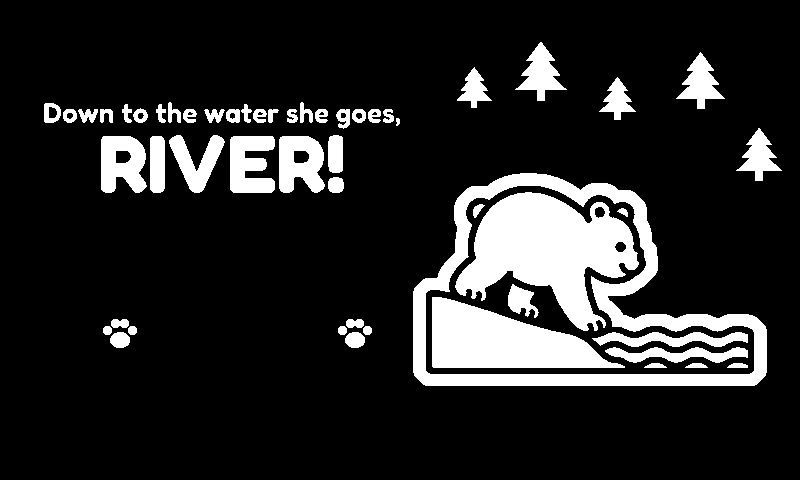
Fox, owl, fawn, bear: who lives in the woods, with a line to say for each.

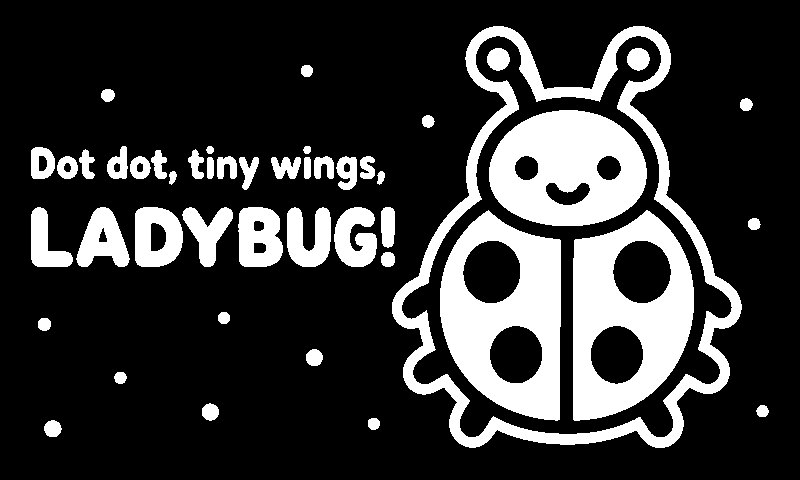
Ladybugs, snails and sunflowers — bold shapes from the backyard.

Moo, baa, oink: the first animals, each with its sound to say out loud.

Someone is coming! They walk in from the edge, step by step, and the word arrives with them.

The same friendly objects with the word printed under them, to point at and name together.

A raccoon who can't sleep, and the night he has if they choose it: over the fence or under the gate, then the apple, the carrot or the berries. For the toddler years.

A smiling pumpkin, a waving ghost, a sleepy moon — glowing white on black.

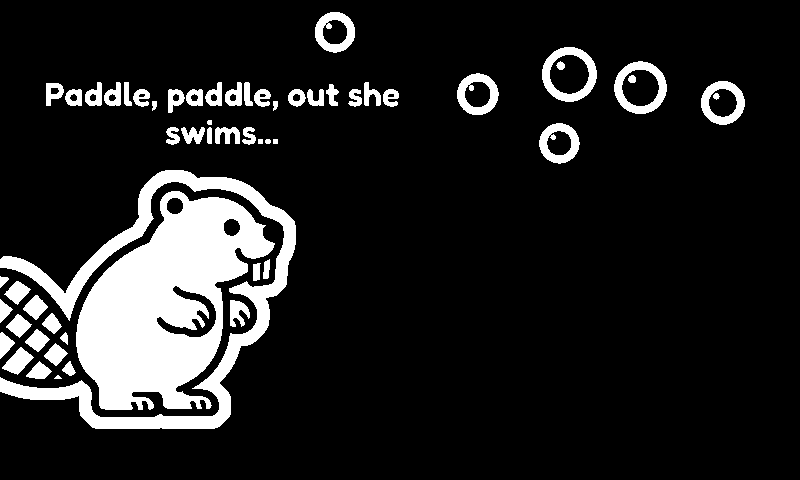
One day with a beaver family: out of the lodge, chomp the tree, build the dam, splash! Your voice tells it.

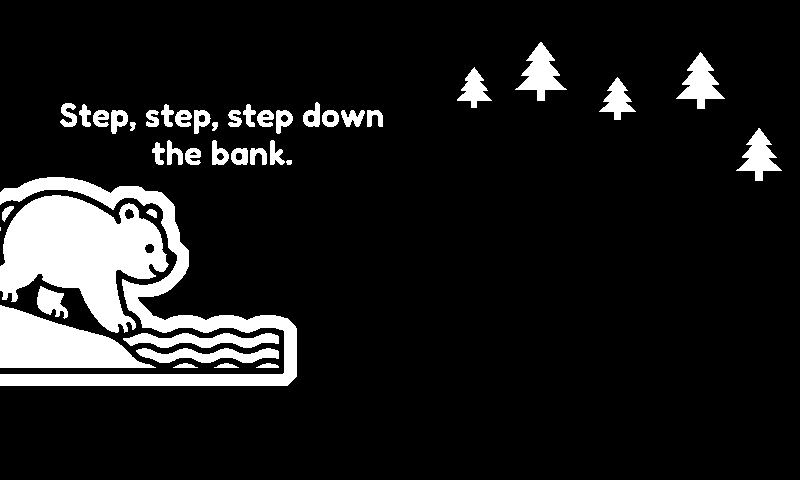
A bear catches a fish for her cubs, and the littlest one carries his piece over to the foxes. Your voice tells it.

Say the line, then wait: your voice moves the picture one step at a time.

Ducklings, tulips and a rainbow — petals drifting over the grass.

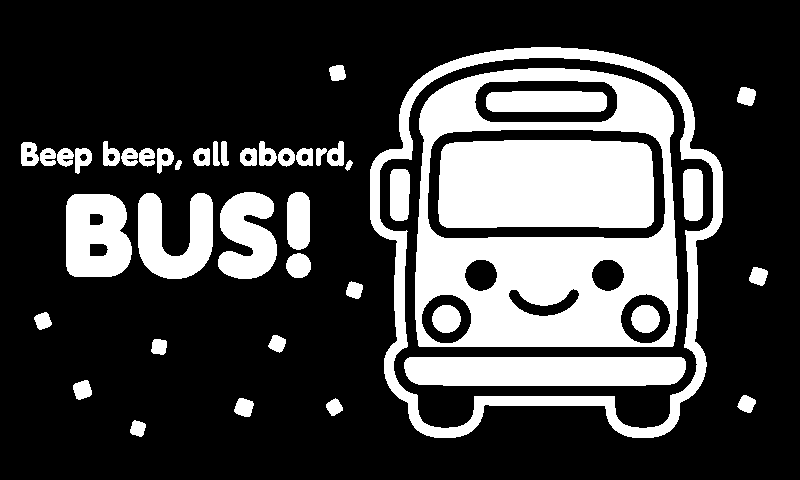
Vroom, choo choo, beep beep: cars, trains and diggers, each with its noise.

One window, all day long. The sun comes up, the cat naps, the owl comes out: the scenes follow your clock.

Sun, cloud, kite, rocket, moon: everything a baby looks up at.

Lion, elephant, giraffe, tiger: a roar-along safari.

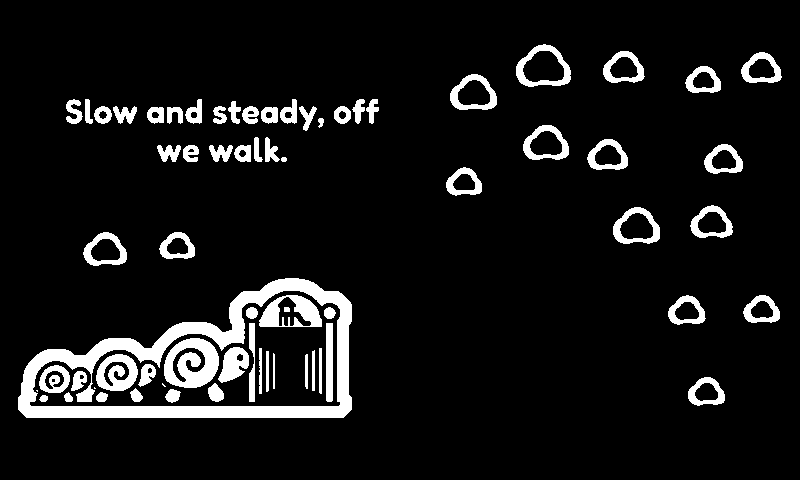
A morning at the playground: take turns on the slide, and make room for the duckling who is too little to climb. Your voice tells it.
Every deck on the shelf today — scroll each row sideways. The starter deck is already on the display when you open the box; the rest arrive in the app on their own, nothing to buy, nothing to update.
Coming soon
The display is the stage. Here's what we're building for it — scroll sideways to explore. Every one keeps the same rules: no camera, no speaker, nothing about your child leaves your phone.
Make a story deck about your family in the app — your names, your dog, your bedtime routine — drawn in the same style as every other card, ready to read aloud in minutes.
Tap the card the first time your baby says the word. Bandit remembers which card and which day — and at two, turns it into a book.
Build a deck on any phone and send it as a link. Faces and stories from the people who can't be in the room every day.
Nap, bath, bedtime — a card that changes with your day, so the display helps the routine instead of interrupting it.
The same card, the line in Spanish, French or Mandarin — for bilingual homes and for grandparents who read in their own language.
Big sister or brother reads the line, and the page turns for them. Suddenly the best reader in the house is the four-year-old — and the baby can't take their eyes off them.
Mounts for the wall beside the crib and the nursery shelf that keep the display in view and out of reach — never on the crib itself, on purpose.
Straight answers
A raccoon wears nature's original black-and-white mask — the same two colors as the page. He is, technically, a thief. The only thing this one steals is your baby's attention for a few minutes at a time — and, the first time their eyes go wide, yours.
Because it's what a young baby can see. Newborn contrast sensitivity is genuinely low, and bold black-and-white shapes are the first things that come into focus. Every card is designed for that, and the display's paper-like ink is the perfect medium for it.
Buy one — we love them. Keep the bookshelf. Then notice that the black-and-white row is ten pages each, never changes, doesn't know the time, doesn't have Grandma in it, and doesn't turn its own page when you read. Bandit is that row — the contrast books, the flashcard packs, the mobile — and does what none of them can.
From the day you bring the baby home to somewhere around two — the years the language research points at hardest — plus a few tap-through stories for the toddler years. Then it goes to the next baby, or the next family.
No. It works out of the box with the starter deck, no app required. The app adds decks and Family Faces over Bluetooth, and needs no sign-up. Everything works offline.
In view and out of reach: the wall beside the crib, a shelf, the dresser — or in your hands during a read-along. It is never attached to or placed in a crib, bassinet, stroller or car seat; that's a rule, not a suggestion. Wall and shelf mounts are coming, and Bandit's magnet already holds to anything steel.
No. Bandit is a nursery display that a grown-up runs from their phone — like a sound machine or a monitor, it's for your baby but not for your baby's hands. It's for looking at, and for you to read from. Keep it out of reach, always.
Somewhere else. Charge it in the kitchen or your bedroom, then bring it back on battery. No cable ever goes near the crib — cords within reach are the real hazard in a nursery, and Bandit is built so there's never one there.
It's a nursery device, priced like one, and built to last through the years that matter. Founding families hear the rest first — ask below.

Why this exists


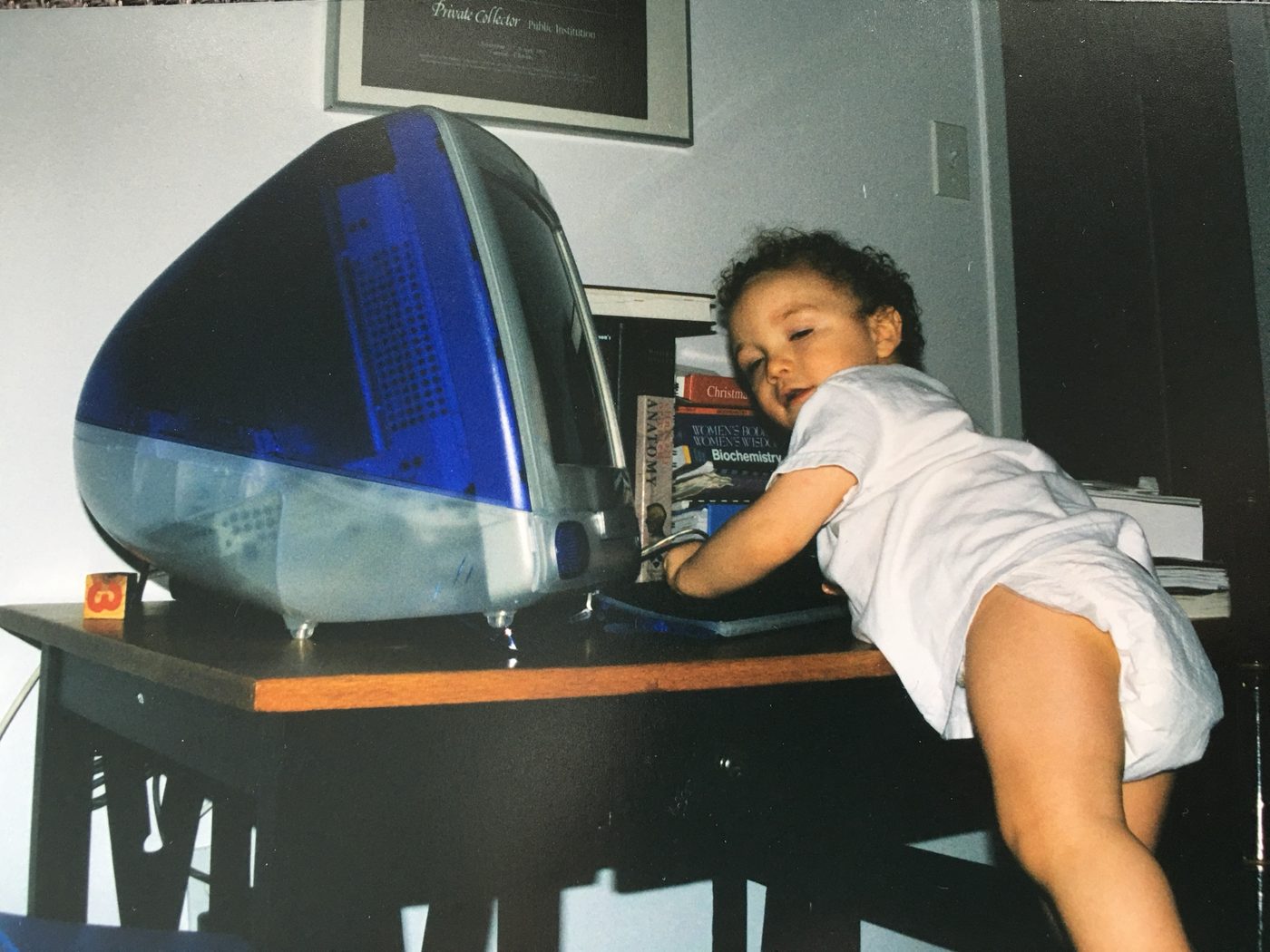
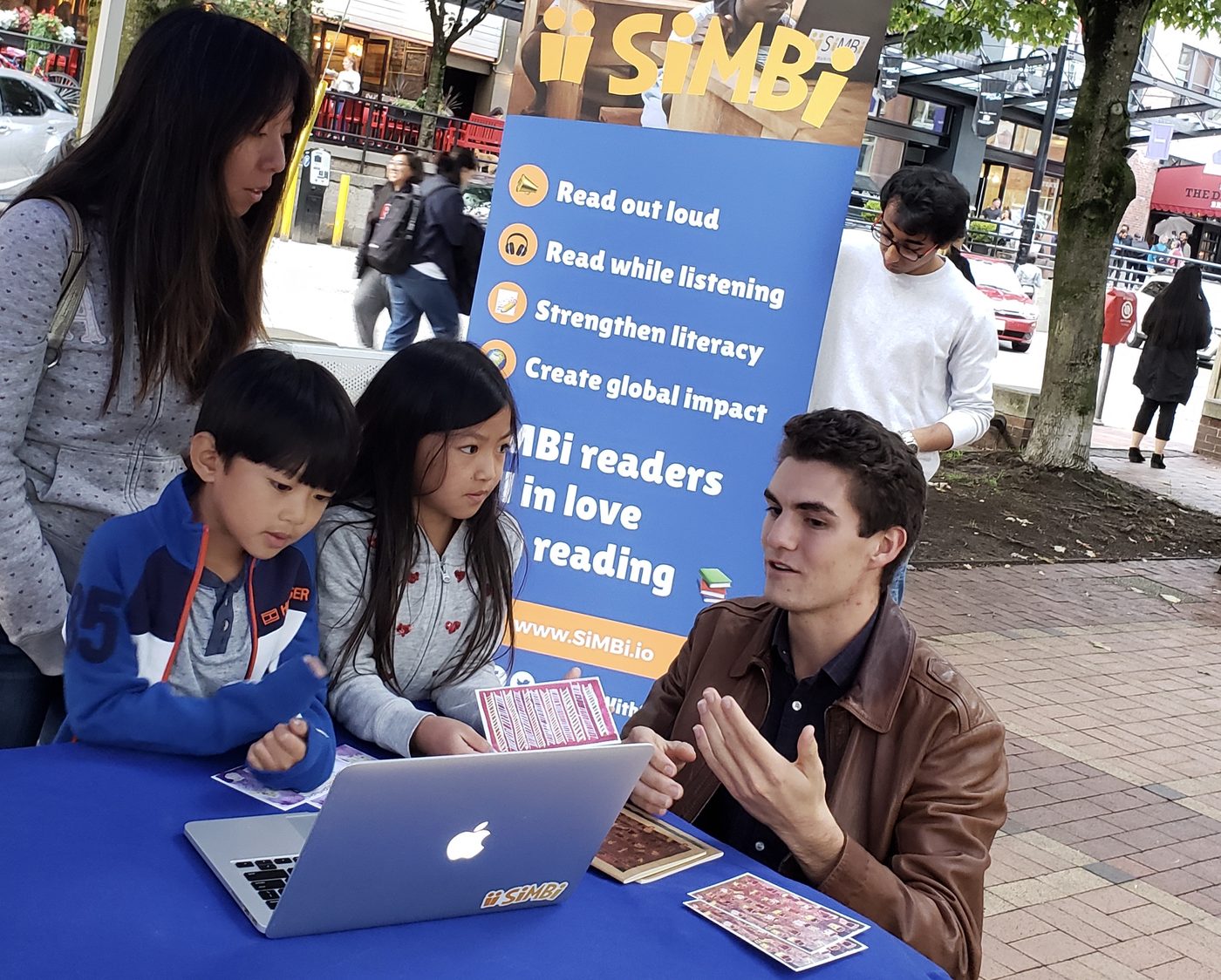
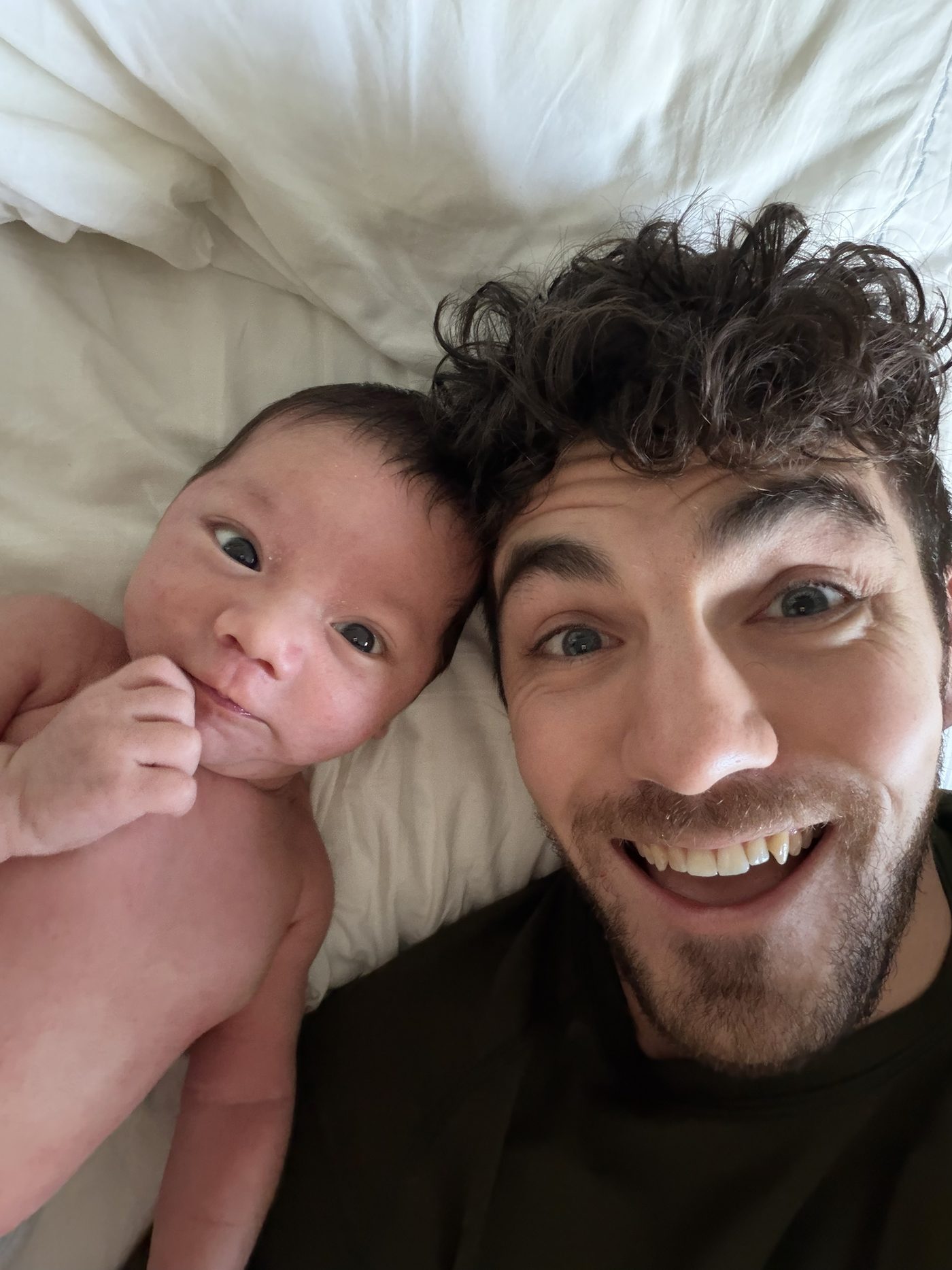
I've always been a builder — there's a photo of me in a diaper at the family Mac to prove it. That led me to building Canada's biggest learn-to-read platform during the pandemic. And now, six years later, I'm a dad.
When my son was born this summer, Bandit didn't exist. The thing I wanted for him wasn't on any shelf: a page for the nursery that shows me the line, waits for my voice, and turns when I've read it. Not a screen for him to watch. A page for me to read from.
So I built it. Everything on this page is checked against what the research actually says, and the founding families are how it goes from research-informed to research-tested. If that sounds like your nursery, I'd love to speak with you.
— Alex, Hudson's dad
Founding families
A small group of families will have the first Bandits before anyone else — the full library, Family Faces and Read Along — and help shape what comes next. Leave your name and number and we'll text you the rest.
The first Bandits, before anyone else has one — the whole library, Family Faces, Read Along.
Name a deck you wish existed. If we draw it, it's yours — with your family's name on it if you'd like.
First production unit, founding-family pricing, and a direct line to the person building it.
Thanks, friend. 🦝
We'll text you to say hello and tell you the rest. That's the whole list.
Your name and number go straight to us and nowhere else — no mailing-list company, no tracker, nothing else on this page records anything. By sending this you're okay with texts from a person about the founding-family program; reply STOP at any time. Privacy policy.